


How Beneficial Microorganisms Improve Soil Health and Nutrient Availability
Explore how beneficial microorganisms support soil biology, improve nutrient availability, and create healthier conditions for stronger crop growth.

March 1, 2026


Explore how beneficial microorganisms support soil biology, improve nutrient availability, and create healthier conditions for stronger crop growth.



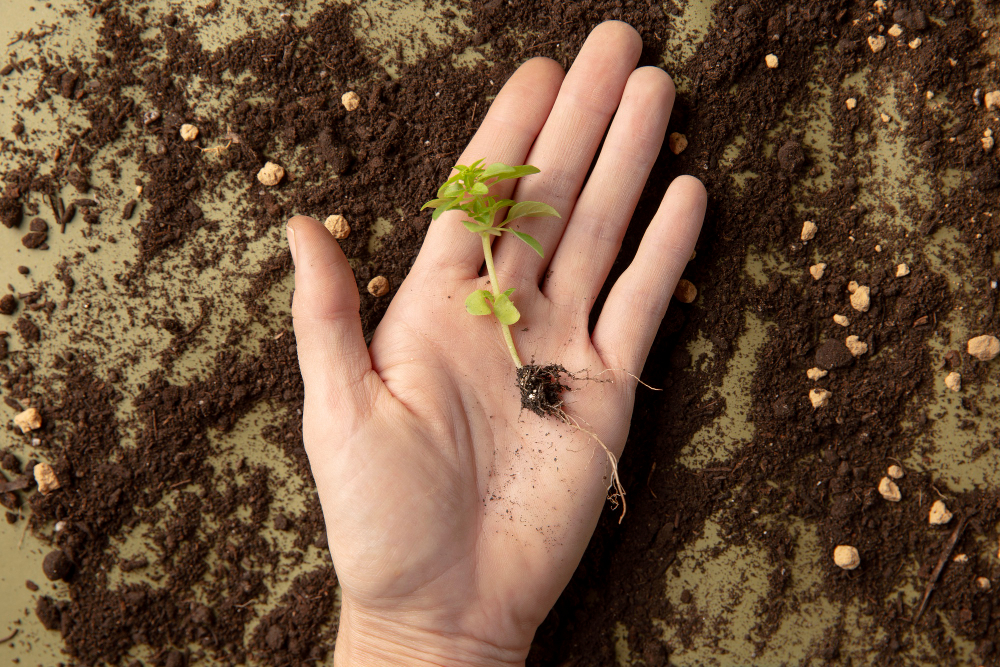
Healthy soil is much more than a growing medium. It is a living ecosystem where microorganisms, organic matter, plant roots, air, and water interact continuously. Beneficial microorganisms are an important part of this ecosystem and can support the natural processes that help crops access nutrients and grow effectively.
Healthy soil provides the foundation for strong root development and consistent crop growth. It helps plants access water and nutrients while creating a suitable environment for beneficial biological activity.
Soil health can be influenced by factors such as:
Maintaining these conditions can help create a more productive and resilient growing environment.
Beneficial bacteria and fungi interact with soil, plant roots, and organic materials. Their activity can support natural processes involved in nutrient cycling and help create conditions that are favorable for plant growth.
Depending on the microorganism and application, they can contribute to:
Plants need essential nutrients for healthy growth, but nutrients present in soil are not always available to plants in a form they can readily use.
Certain beneficial microorganisms can participate in natural processes that help make nutrients more accessible within the soil environment.
This can support nutrient uptake and help plants access the resources they need for growth.
The area surrounding plant roots, known as the rhizosphere, is a highly active biological environment.
Beneficial microorganisms can interact with plant roots within this zone and contribute to biological activity around the root system.
A healthy root-zone environment can support:
Microbial activity can also contribute to biological processes that influence soil structure.
Healthy soil structure allows better movement of air and water through the soil and provides space for roots to develop.
Supporting soil biological activity can therefore be an important part of broader soil-health management.
Different microorganisms have different characteristics and agricultural applications.
Certain Bacillus species are used in biological agricultural solutions to support plant health and address specific crop-related challenges.
Trichoderma is a beneficial fungus associated with soil and plant-root environments. Certain strains are used to help manage soil-borne diseases and support healthier growing conditions.
Other microorganisms, including Beauveria, Metarhizium, and Paecilomyces, are used in biological crop-protection solutions for specific agricultural challenges.
The appropriate microorganism depends on the crop, target problem, soil conditions, and intended application.
Beneficial microorganisms work best as part of a broader approach to soil management.
Farmers can support soil health by combining biological solutions with practices such as:
A combination of good farming practices and suitable biological solutions can help create healthier growing conditions over time.
There is no single biological solution for every field. The right product depends on the crop, soil conditions, target challenge, and stage of crop development.
At Mara LifeSciences, our technical team helps farmers understand biological solutions and identify suitable options for their crop and soil-management needs.
Soil health and plant health are closely connected. By supporting beneficial microbial activity and natural nutrient-cycling processes, biological solutions can become part of a practical approach to healthier and more sustainable crop production.





%201.svg)
